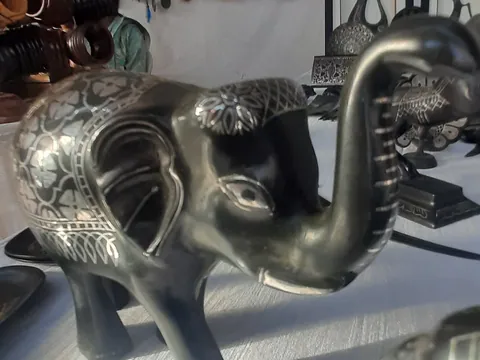

Inlay is a subtractive job. A line is cut into the wood to a set depth, a strip of material is hammered into the groove, and the surface is levelled. What you see is the cut, so the quality of the line is the quality of the piece: a wandering groove cannot be corrected.
Piercing, the jaali, is the opposite. The pattern is removed and the ground stays, which means the piece is designed around what remains standing. A pierced panel has a structural problem a flat inlay does not, and it decides how thick the stock must be.
Painting adds neither cut nor hole. It sits on the surface, so it depends on ground preparation and on the fastness of the pigment, and it is the one of the three that will show wear first at an edge.
For a buyer, the questions that separate a quotation are: which of the three is being used, what material is inlaid, what the finish is over the inlay, and whether the piece is for a handled object or a wall. A box that is opened daily is not specified like a panel.
The carved wood reference in the catalogue names the craft but not a guild, because no document names one to us. The inlaid ware in the photograph above is field stock from the October craft fair, shown as a technique reference rather than as that exact piece.
The three techniques also age differently. Inlay can loosen if the groove was cut too shallow and the strip was pinned rather than seated; a pierced panel fails at the standing bridges if the stock was thin; a painted surface shows at the edges first. A buyer who knows which of the three is being bought can ask for the right maintenance note.
From two metres they are one object. From fifty centimetres, three crafts.