
The body is a blend: crushed serpentine rock and a weathered local clay, mixed to a damp mass that will hold a shape but will not throw. The piece is moulded by hand over a form, then trimmed and dried.
Because there is no wheel, wall thickness is decided by the hand that built it. Two pots from the same batch are the same size and not the same object.
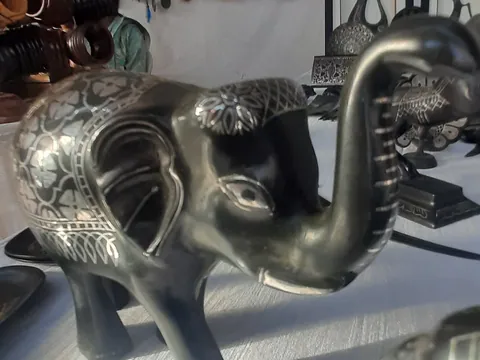
The firing is an open stack rather than a closed kiln, and the smoke does the finishing. The iron in the stone darkens the surface to a matte charcoal, and no glaze is applied at any stage. That is the whole reason the ware is used for cooking: there is no glass layer to craze, and no decorative surface to chip into food.
The consequence a buyer should plan for is fragility of a particular kind. Stoneware with a high stone content is strong under heat and less tolerant of a point impact, so a dropped pot fails where a dropped glazed earthenware might chip.
We hold no supplier document for Longpi ware yet. The catalogue carries a black tableware reference for the craft, priced and sized on request, and the photograph above is field stock from the October craft fair rather than that exact set. A food-contact report will be published with a quotation when a supplier issues one.
Heat behaviour is the other reason this ware survives a kitchen. A body with this much stone conducts differently from porcelain, so a pot that goes from a flame to a wet counter is asking more of the material than a glazed one would. We specify the use case with the cluster rather than assuming both.
No glaze is applied at any stage. The surface is the body.