
Warli painting is a wall practice: white rice paste on an earthen wall, drawn for a wedding or a harvest, with a border first, then the figures, then the fill. The circle, the triangle and the square are not decoration. They come from the way the wall is built and the way the ceremony moves along it.
Gond painting from the Dindori and Mandla region works the other way round. A figure is drawn as an outline and then filled with a pattern of lines, dots and hatching, and the fill is the signature. Two painters drawing the same bird will produce different birds because the infill is theirs.
Both moved onto paper when a market for the work appeared, and both now arrive as printed or hand-painted cloth, wall panels and cushion covers. The commercial version is not lesser, but it is a different object: it is made to be seen from a distance rather than to belong to a ritual.
What to ask for on a painted order: whether the piece is hand-painted or block-printed with a painted design, the pigment system and its fastness grade, and whether the panel is reversible. A hand-painted cloth usually shows the work through the back; a printed one shows a pale ghost.
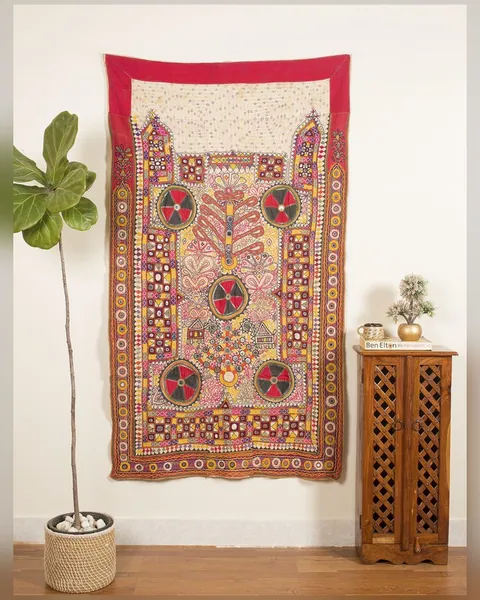
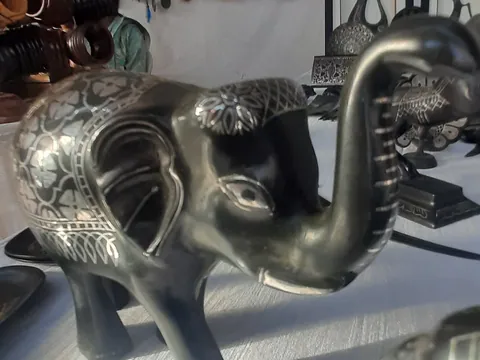
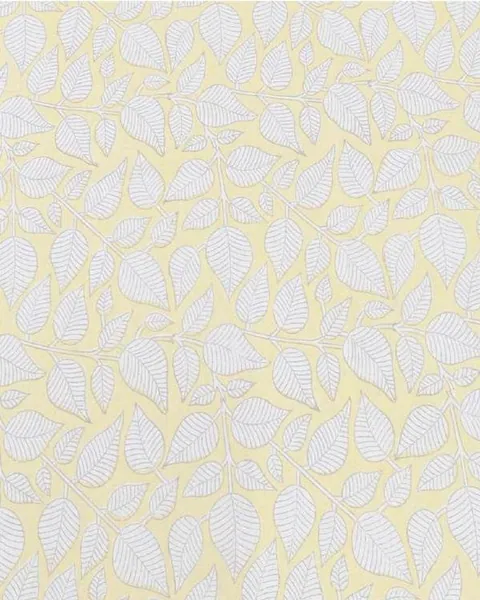
The painted panels photographed at the October craft fair, shown above and beside this dispatch, are the source of the Gond and Warli stock we now hold. The artists and the village are not named on the sheet we were given, so we list the pieces as painted cotton with the cluster to confirm.
A wall painting belongs to a room. A canvas painting belongs to a buyer.